
How to Choose the Right Hybrid Inverter for Photovoltaic Energy Storage Systems
With increasing electricity costs and unstable grid conditions, more households and businesses are choosing photovoltaic technology with battery storage systems to improve energy independence.
However, choosing the right hybrid inverter is often the most important decision.
A suitable solar inverter determines:
How much solar energy can be converted
Whether batteries can be integrated
How long backup power can last
Whether the system can operate during grid failures
For residential and small commercial applications, the most common questions are:
What inverter capacity do I need?
Should I choose single-phase or three-phase?
Can the inverter work with batteries?
Can it provide backup power during outages?
1.Choose the Right Inverter Capacity Based on Power Demand
The inverter capacity should match the household load and photovoltaic system size.
Common residential configurations:
| Application | Recommended Hybrid Inverter Size |
|---|---|
| Small home | 3kW-5kW |
| Medium household | 5kW-10kW |
| Large home / small commercial | 10kW-15kW |
The inverter does not determine total energy storage capacity. Instead:
Inverter kW = maximum power output
Battery kWh = available stored energy
For example:
A 10kWh battery with a 5kW hybrid inverter can theoretically provide up to 5kW output power, while the battery determines how long the system can operate.
The U.S. Department of Energy explains that the inverter is the key power electronics component that converts DC electricity generated by photovoltaic modules into usable AC electricity for homes and grids.
2. Hybrid Inverter vs Traditional Solar Inverter
Traditional photovoltaic inverters mainly convert solar energy into household electricity.
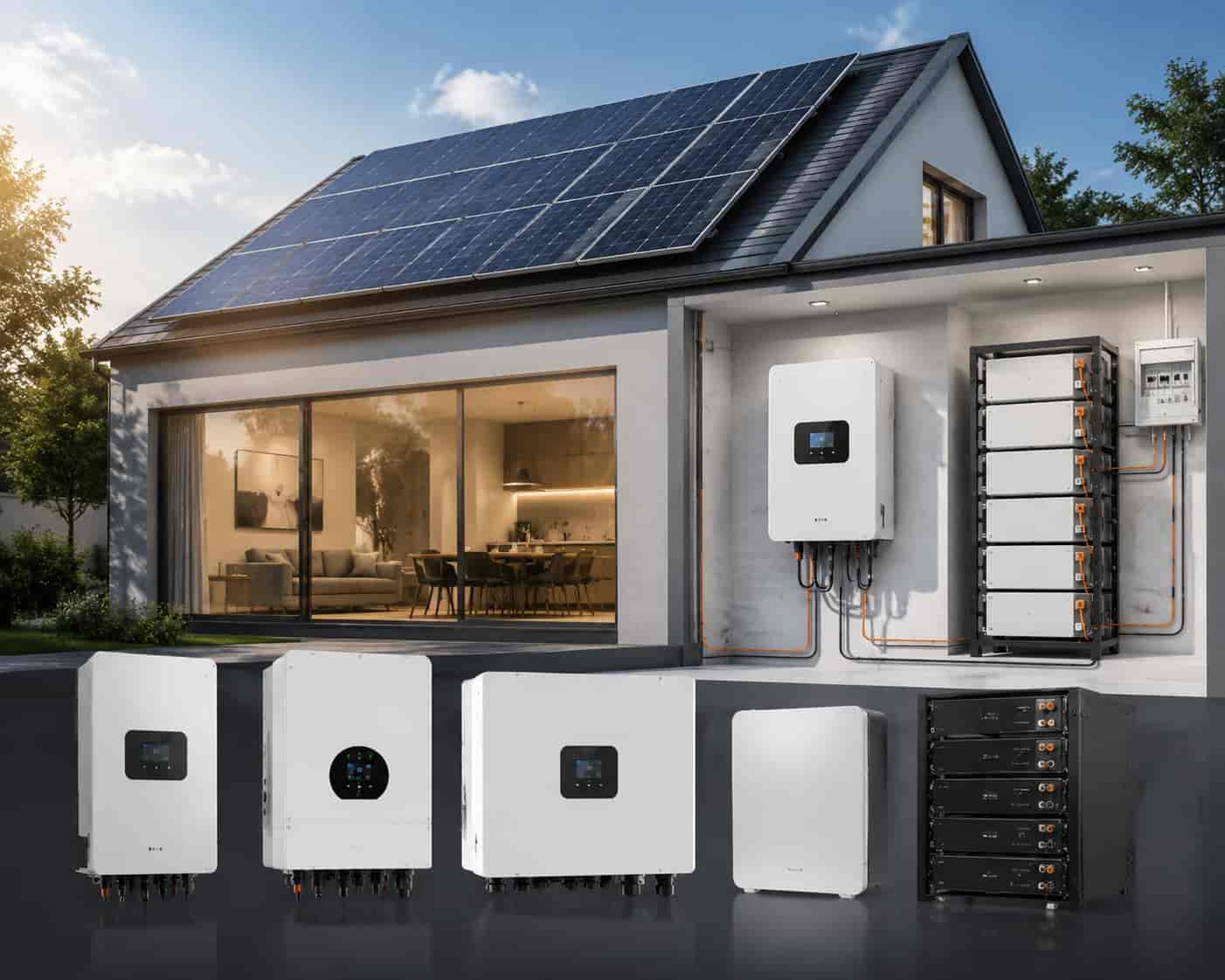
A hybrid inverter integrates:
Solar inverter function
Battery charging control
Energy management
Backup power operation
This makes hybrid inverter systems more suitable for modern photovoltaic energy storage applications.
According to Australia’s Department of Climate Change, Energy, the Environment and Water, a hybrid inverter combines solar inverter and battery inverter functions in one device, allowing photovoltaic systems to directly integrate battery storage.
Compared with installing separate solar and battery systems, hybrid solutions can reduce system complexity and improve energy management.
NREL research shows that PV and battery hybrid systems can share inverter hardware, reducing system costs. For some residential PV + storage configurations, simultaneous installation can reduce total costs compared with separate installation.
3. Battery Compatibility Is Essential for Energy Storage Systems
A modern solar storage inverter should support lithium battery integration.
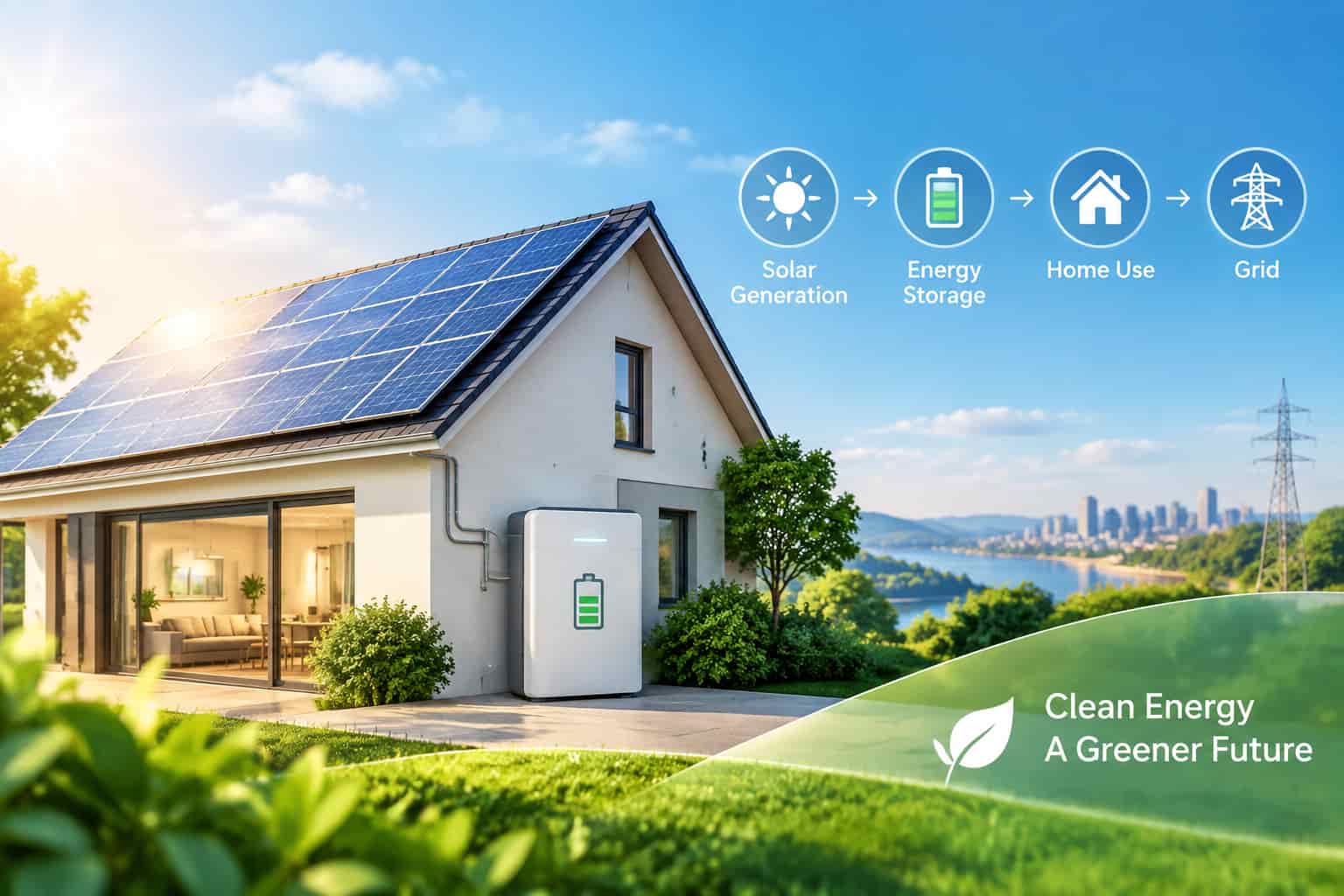
During daily operation:
Daytime
→ Solar power supplies loads
→ Excess energy charges the battery
Night
→ Battery supplies electricity
Grid failure
→ Hybrid inverter switches to backup mode
A compatible inverter should support:
Lithium battery communication
BMS communication
Battery charge/discharge control
Smart energy management
The International Energy Agency Photovoltaic Power Systems Programme (IEA PVPS) highlights that PV + battery energy storage performance depends on system design, inverter behavior, control strategy, and battery management.
4. Backup Function: Power During Grid Failures
For regions with unstable electricity supply, backup capability is one of the most important inverter features.
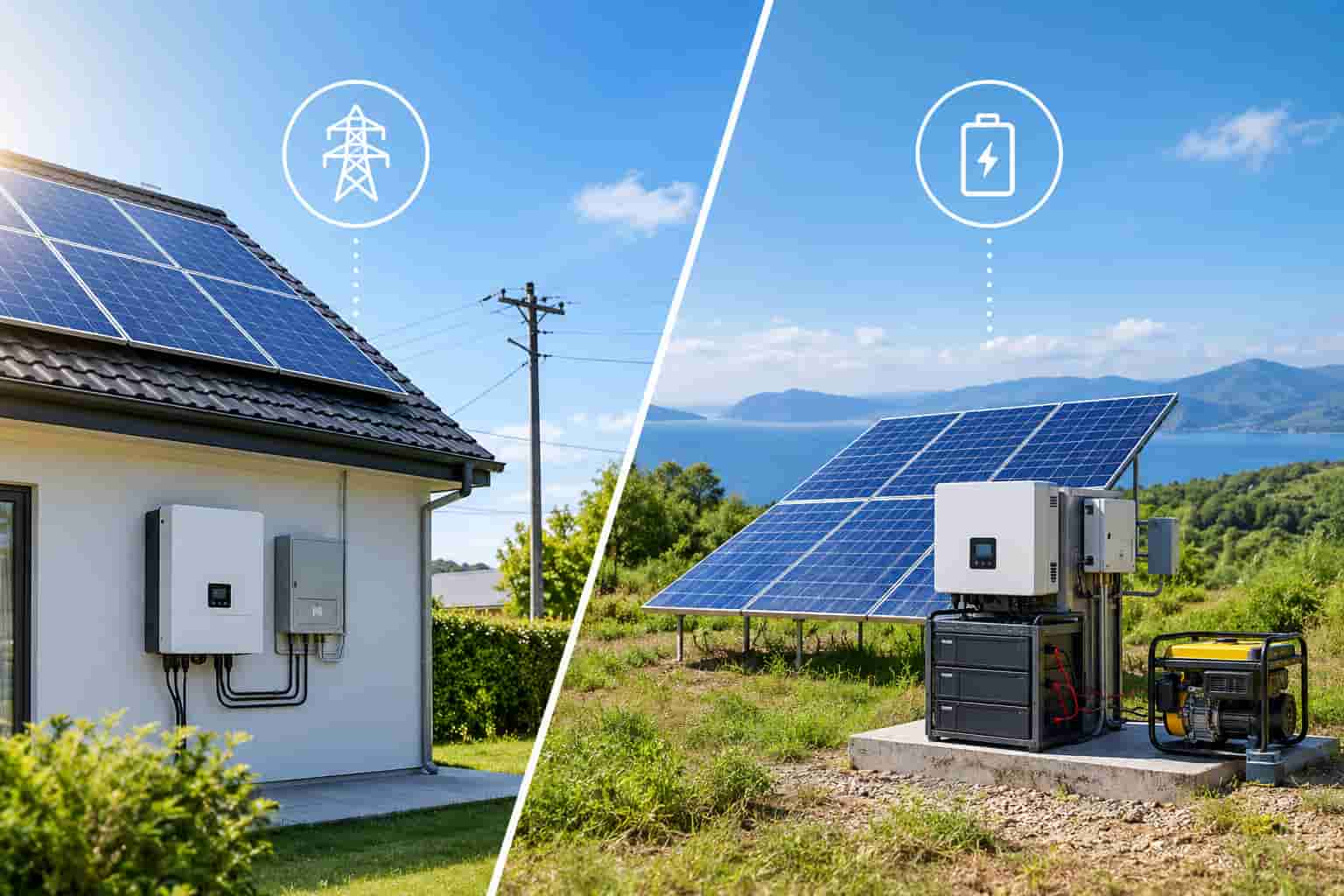
A grid-tied solar inverter normally shuts down during grid failure for safety reasons.
A hybrid inverter with battery storage can continue supplying electricity through backup output.
Typical backup loads include:
Lighting
Internet router
Refrigerator
Security system
Communication devices
The U.S. Department of Energy states that solar-plus-storage systems rely on advanced inverters to operate independently from the grid during outages when designed with backup capability.
5. Single-Phase or Three-Phase Hybrid Inverter?
The choice depends on the electrical system.
Single-Phase Hybrid Inverter Suitable for:
Residential houses
Apartments
Small energy systems
Typical range: 3kW-10kW
Three-Phase Hybrid Inverter Suitable for:
Large homes
Commercial buildings
Higher power demand applications
Advantages:
Higher power capacity
Better load balance
Suitable for larger photovoltaic systems
Recommended Hybrid Inverter Solutions
For different photovoltaic energy storage requirements, MVC Solar provides multiple inverter solutions:
Deye Hybrid Inverter Suitable for:
Residential energy storage
Backup power applications
Solar + battery systems
Features:
Battery compatibility
Intelligent energy management
Backup output function
Solis Hybrid Inverter Suitable for:
Residential and small commercial systems
Features:
High conversion efficiency
Smart monitoring
Reliable grid connection
Final Consideration: Choose an Inverter Based on the Complete System
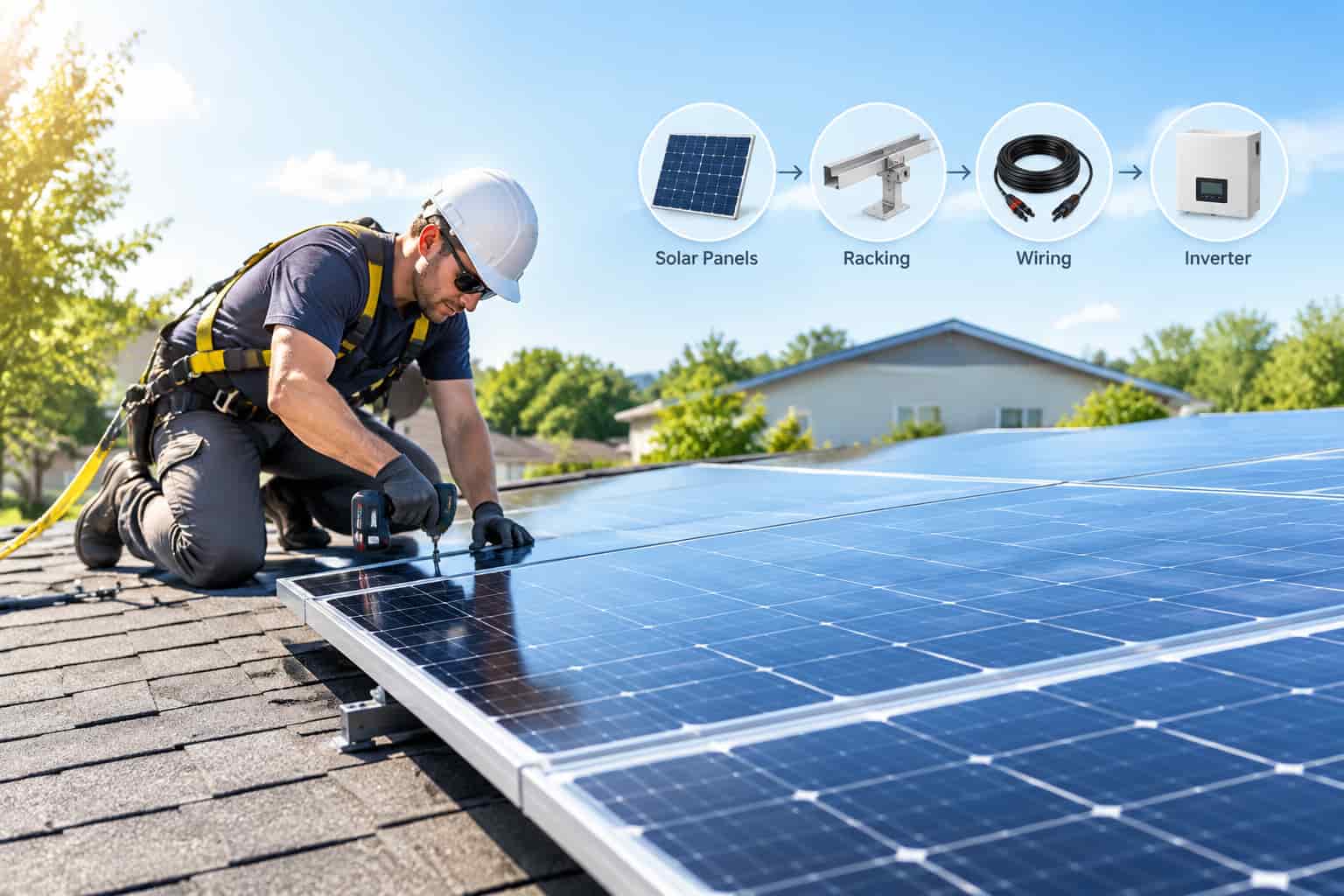
A reliable photovoltaic energy storage system requires coordination between:
With the development of photovoltaic technology, hybrid inverter systems are becoming the core component of modern solar storage solutions, helping households and businesses achieve greater energy security and lower electricity costs.
You might be interested in: Solar Inverter Installation: A Step-by-Step Guide